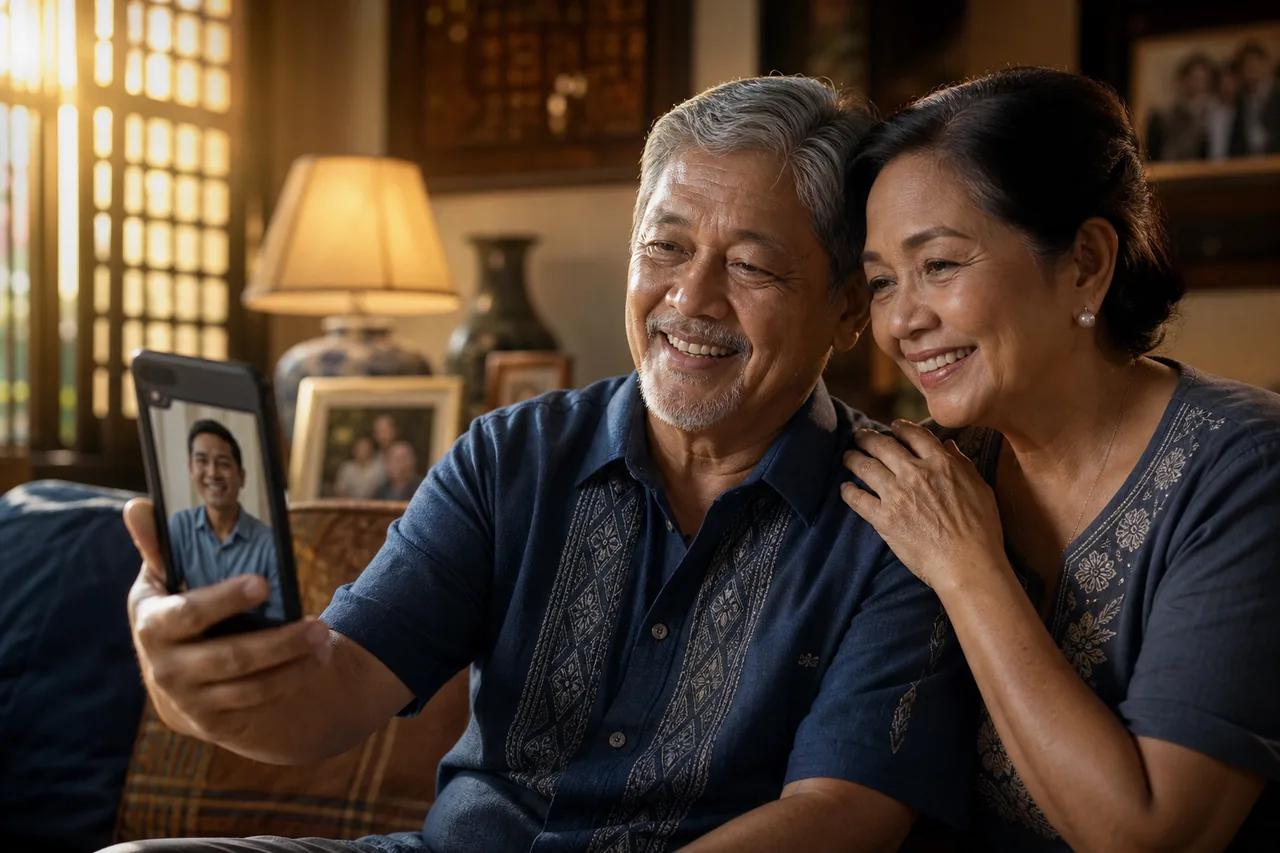
For many Filipinos who build a life in Australia, the dream is never just about their own career — it's about one day having Nanay and Tatay close by, watching the apo grow up, no more goodbyes at NAIA. The Australian Government does offer parent visas. The hard truth nobody wants to say out loud is that the most affordable one carries an estimated 33-year queue, and even the expensive "fast" version is officially estimated at 15 years.
That sounds brutal, and it is — but knowing it now saves you from spending thousands on the wrong pathway. This guide compares the three realistic options Filipinos use to bring parents to Australia: the non-contributory Parent visa (subclass 103), the Contributory Parent visa (subclass 143), and the Sponsored Parent (Temporary) visa (subclass 870) — using the official figures current as at 31 March 2026, so you can plan with your eyes open.
- Parent visa 103/804: estimated 33 years for new applications; as at 31 March 2026 only queue dates up to July 2013 were released for final processing.
- Contributory Parent 143/173: estimated 15 years; as at 31 March 2026 queue dates up to November 2018 were released.
- 143 cost: two instalments — about AUD 5,040 first plus about AUD 43,600 second, roughly AUD 48,640 per applicant (the highest second instalment in the family program).
- Sponsored Parent (Temporary) 870: stay up to 3 or 5 years per grant (cumulative max 10 years), and it is the only parent visa with no balance-of-family test.
- All permanent parent visas are capped and queued; a queue date is assigned only after core health and character criteria are met.
Figures sourced from official Australian Government (homeaffairs.gov.au) and related sources, current as of June 2026. Visa rules and fees change — re-verify before you apply.
The 103: lowest cost, around a 33-year queue
The subclass 103 Parent visa (and its onshore twin, the Aged Parent 804) is the "traditional" permanent parent visa. Its appeal is the price: the government charge is far lower than the contributory route, with an indicative first instalment of around AUD 5,125 and a much smaller second instalment of around AUD 2,065. Compared with tens of thousands of dollars for the 143, that looks like a bargain.
The catch is the queue. The 103 carries an official estimated processing time of 33 years because the program is capped and demand vastly outstrips the places released each year. As at 31 March 2026, the Department had only released applications with a queue date up to July 2013 for final processing. In plain terms: applications already waiting since 2013 are only now being looked at.
For most Filipino families this makes the 103 a practical non-starter unless the parent is comparatively young and you genuinely treat it as a decades-long "lock in your place" decision. A parent in their 60s applying today is, on these timeframes, unlikely to see a grant within a normal life expectancy. The low fee does not buy speed — it buys a place at the back of a very long line.
The 143 Contributory: around a 15-year wait, around AUD 48,640 cost
The Contributory Parent visa (subclass 143, with its two-step 173 variant) is designed for families willing to pay much more to wait much less. "Much less," however, is relative. The official estimated processing time is 15 years, and as at 31 March 2026 only queue dates up to November 2018 had been released for final processing. It is faster than the 103, but it is still measured in years, not months.
It is also expensive — by a wide margin the most costly pathway in the family stream. The 143 is paid in two instalments: roughly AUD 5,040 on application and roughly AUD 43,600 per applicant before grant, for a total of about AUD 48,640 per applicant. For two parents applying together, that is approaching AUD 97,000 in government charges alone, before agent fees, medicals, police clearances, and the Assurance of Support bond that contributory applicants typically must lodge.
So the 143 is the choice for families who can afford a very large outlay and accept that "contributory" still means a long queue. It buys a meaningfully shorter wait than the 103, but it does not buy a quick reunion.
The 870 Sponsored Temporary: the realistic "see them now" option
This is the visa most Filipino families actually use to spend real time with their parents while the permanent options grind through their queues. The Sponsored Parent (Temporary) visa (subclass 870) lets an approved sponsor bring a parent to Australia for a continuous stay of up to 3 or 5 years per grant, with a cumulative maximum of 10 years across grants. Crucially, it is the only parent visa that does not require the balance-of-family test — so parents who would never qualify for a permanent parent visa can still come.
The cost scales with the length of stay you choose. The first instalment is around AUD 1,180, with a total of roughly AUD 6,070 for an up-to-3-year stay or roughly AUD 12,140 for an up-to-5-year stay, per applicant. That is a fraction of the 143's price tag, and it delivers something the permanent visas cannot: your parents physically with you, this year, not in a decade or three.
The trade-offs are real. The 870 is temporary — it does not lead to permanent residence and does not give Medicare access, so private health cover is required. The sponsor must be approved first (a separate step), a security bond may be required, and the program is capped at around 15,000 places a year. It is best understood as a long-term family-visit visa, not a settlement visa — but for "I want my parents here now," it is the most realistic option on the table.
Using the official 31 March 2026 queue dates
The estimated "33 years" and "15 years" headlines are easy to misread. What actually matters is the queue release date the Department publishes each quarter — the date showing which applications have reached final processing. Reading those dates honestly is the single most useful thing you can do before spending money.
| Visa | Estimated processing | Queue released to (31 Mar 2026) | Government charge |
|---|---|---|---|
| Parent 103 / Aged Parent 804 | ~33 years | July 2013 | ~AUD 5,125 first; ~AUD 2,065 second (indicative) |
| Contributory Parent 143 / 173 | ~15 years | November 2018 | ~AUD 5,040 first; ~AUD 43,600 second (~AUD 48,640 total) |
| Sponsored Parent (Temporary) 870 | Temporary; capped ~15,000/yr | n/a — not a permanent queue | ~AUD 1,180 first; ~AUD 6,070 (3yr) or ~AUD 12,140 (5yr) total |
Notice the gap: the 143 queue has moved to late 2018, while the 103 queue is still stuck in 2013. A queue date is only assigned after an application meets core health and character criteria — so an incomplete or poorly prepared application can wait even longer than the headline number suggests. These are official figures as at 31 March 2026 and they shift each quarter; always check the current Home Affairs parent-visa queue page before you decide.
Choosing based on age, money and urgency
There is no single "best" parent visa — only the one that fits your family's age, budget and timeline. A practical way to think about it:
- You want them here soon, full stop: the 870 is almost always the answer. It sidesteps the balance-of-family test and the decade-plus queues, and it is by far the cheapest. Treat it as a multi-year family-visit visa, plan private health cover, and get the sponsor approved early.
- You can afford a large outlay and want eventual permanence: the 143 is the realistic permanent route. Budget the full ~AUD 48,640 per parent plus the Assurance of Support bond, and accept a ~15-year horizon.
- You want to lock in a place cheaply and time is not urgent: the 103 has the lowest charge, but with a ~33-year queue it only makes sense for younger parents prepared to wait decades.
- Your parents fail the balance-of-family test: only the 870 is exempt. If most of their children are outside Australia, the permanent 103/143 may simply not be available, full stop.
Many families combine pathways — for example, using the 870 to be together now while a 143 application sits in the queue for the future. The right mix depends on your parents' ages, your finances, and how the balance-of-family test applies to your specific family. That last point trips up more Filipino applicants than the fees do, which is why it deserves its own deep dive before you commit.
Frequently asked questions
How long is the wait for an Australian parent visa?+
Is there a faster option to bring my parents?+
How much does the Contributory Parent visa cost?+
Not sure whether the 870, 143 or 103 fits your parents?
Book a free assessment and we'll map the right Australian pathway to your situation — honestly, with upfront peso costs.